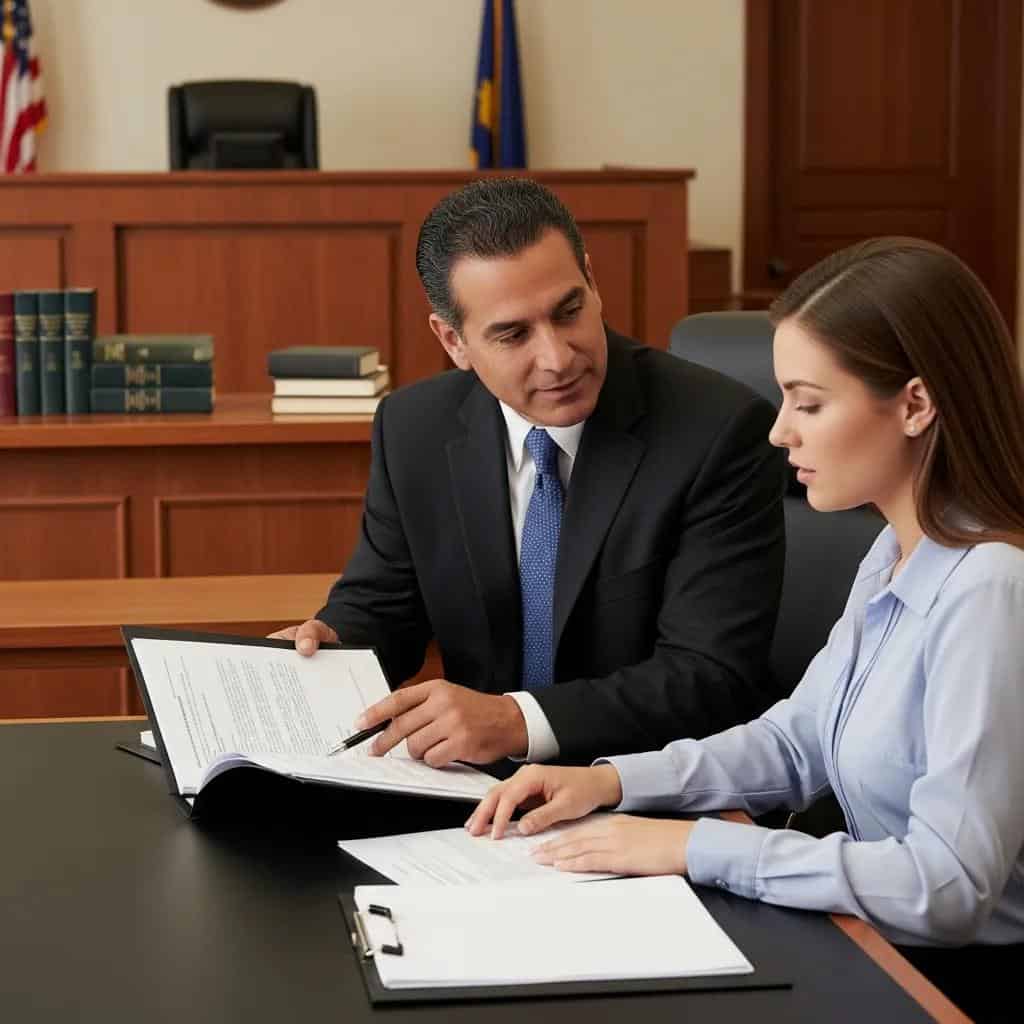
What Does a Criminal Defense Attorney Really Do? How Lawyers Protect Your Rights and Influence Outcomes
A criminal defense attorney is your legal advocate when you’re charged with a crime. They enforce constitutional protections, challenge the prosecutor’s case, and guide the strategic decisions that affect your freedom and future. This guide breaks down what defense lawyers do, why each duty matters, and how strong advocacy can reduce charges, limit penalties, or secure an acquittal. Many people don’t know the tactical steps an attorney takes from arrest through sentencing; understanding those steps helps you decide when to seek counsel. You’ll get a clear overview of core responsibilities, stage-by-stage tasks, the tactical value of hiring a former prosecutor, common defense services in Arizona, and your practical rights during an arrest. Read on to know what to expect and when to contact counsel to protect your rights in Arizona.
What Are the Core Responsibilities and Duties of a Criminal Defense Attorney?
At the center of a criminal defense attorney’s work are five linked responsibilities: protecting legal rights, investigating the facts, advising clients on choices, negotiating with prosecutors, and preparing for trial when necessary. Those actions aim to reduce legal risk, exclude unlawfully obtained evidence, and achieve the best possible result for a client. Defense lawyers balance thorough investigation with persuasive advocacy—shaping defenses, evaluating plea offers, and presenting mitigation at sentencing. The sections below break these responsibilities into concrete tasks and show how counsel handles each stage of a case.
Defense attorneys defend constitutional and statutory protections by filing pretrial motions, demanding discovery, and making targeted objections that limit improper evidence. They move to suppress statements or searches obtained in violation of the law, insist on full disclosure of prosecutorial evidence, and assert the right to counsel during custodial questioning. These actions narrow the prosecution’s options and often reduce the chance or severity of a conviction.
Investigation is another core duty: interviewing witnesses, obtaining surveillance and records, serving subpoenas, and hiring experts to review forensic or technical evidence. A careful factual investigation uncovers exculpatory material and builds alternative narratives to the prosecution’s theory. Strong investigation informs plea strategy or trial preparation and directly affects which legal options a client should consider.
Finally, defense lawyers counsel clients—translating legal risk into clear choices about pleas, trials, and long-term consequences. That advisory role requires explaining likely outcomes, collateral effects (like employment or licensing), and practical tradeoffs so clients can make informed decisions. Knowing these roles helps you understand what an attorney will do when building your defense.
How Does a Criminal Defense Lawyer Protect Your Legal Rights?
A defense lawyer enforces Miranda protections, the right to counsel, and Fourth Amendment limits on searches and seizures by asserting legal claims and seeking suppression when violations occur. If police question someone without proper Miranda warnings, an attorney can ask the court to exclude those statements. Counsel also scrutinizes stops, warrants, and searches for probable cause defects. Attorneys press for complete discovery and pursue Brady material—any exculpatory evidence the state must disclose—which can change defense strategy dramatically. These protective measures reduce prosecutorial leverage and shape negotiation and trial decisions while creating opportunities for further investigation.
Miranda Rights and Criminal Justice Procedures in the US
The U.S. criminal justice system operates at both federal and state levels, and most cases resolve by plea or trial; many are also dismissed. It’s important to understand the institutional context and policies that shape criminal courts. Fourth Amendment limits on searches and seizures protect people from unreasonable police intrusion, while the Fifth Amendment and Miranda rules guard against compelled self-incrimination during custodial questioning. These constitutional protections are central to ongoing prosecutions and to defense strategies that seek to exclude unlawfully obtained evidence.
Miranda v.
Arizona and Duties to Police for Criminal Suspects in Criminal Justice under the Constitution of United States of America, A Alim, 2022
What Are the Main Tasks During Investigation, Plea Bargaining, and Trial?
During investigation, defense counsel gathers and analyzes physical and testimonial evidence, serves subpoenas, interviews witnesses, and retains experts—such as forensic analysts or accident reconstruction specialists. That work develops alternate theories or reveals constitutional defects in the prosecution’s case. In plea bargaining, attorneys weigh risks and negotiate terms to seek charge reductions, lower sentencing exposure, or diversion when appropriate, using weaknesses uncovered in investigation and procedural challenges. If the case proceeds to trial, preparation includes motions in limine, jury research and selection, witness preparation, cross-examination planning, and persuasive closing arguments. Trial is where investigation and advocacy are tested live; the lawyer’s courtroom skills determine how effectively the defense narrative reaches a judge or jury.
Defense Attorney Bargaining and Client Counseling Tactics in Plea Negotiations
Research of courtroom practitioners in a large urban county shows that defense attorneys use a range of negotiation tactics, from humanizing client details to strategic delays. Attorneys also vary in how they counsel clients about plea offers and in the degree of decision-making autonomy they recommend. These practices shape negotiation outcomes and client choices.
“Sometimes I’m just wearing the prosecutor down”:
An exploratory analysis of criminal defense attorneys in plea negotiations and client counseling, JG Lee, 2020
- This list summarizes routine defense activities: Investigation: Collecting evidence, issuing subpoenas, interviewing witnesses.Pretrial motions: Seeking suppression, dismissal, and enforcing discovery.Negotiation: Crafting plea strategy, pursuing mitigation and diversion.Trial preparation: Jury strategy, expert testimony, cross-examination planning.Sentencing advocacy: Presenting mitigation and sentencing recommendations.
These tasks flow from investigation to negotiation and, if necessary, trial—each step influencing the next strategic choice.
How Does Hiring a Former Prosecutor Benefit Your Criminal Defense Case?
Hiring a former prosecutor brings insider perspective about how cases are evaluated, which evidence prosecutors rely on, and the legal theories they emphasize. That experience delivers practical advantages: anticipating prosecutorial strategy, spotting weak evidence early, and commanding credibility in plea talks. Former prosecutors understand courtroom norms, timelines, and local priorities—insight that lets them shape focused defenses and reduce uncertainty for clients. The sections that follow list specific advantages and how they matter in Arizona courts.
A former prosecutor’s time in the courtroom sharpens case assessment and speeds identification of legal vulnerabilities since they once decided how and why charges were brought. They can predict common lines of questioning, likely witness behavior, and the evidence prosecutors will emphasize, allowing proactive motions and targeted discovery requests. That background improves trial readiness and can shorten the pretrial phase by concentrating efforts where the prosecution is weakest.
Former prosecutors often carry negotiating credibility with current prosecutors and judges, which can lead to better plea offers or pretrial resolutions. Knowing prosecutorial incentives—like caseload pressures or policy goals—lets them frame arguments in ways that resonate with decision-makers. That leverage can produce reduced charges, alternative sentencing, or diversion where appropriate.
Local experience is another asset: familiarity with county courts means knowing scheduling practices, preferred pleading language, and which mitigation arguments persuade specific judges. That insight can speed resolution and help avoid pitfalls unfamiliar counsel might miss. The next section explains how local experience affects results in Arizona counties such as Maricopa, Pinal, and Yavapai.
What Advantages Do Former Prosecutors Bring to Defense Strategy?
Former prosecutors offer tactical foresight, fluency with courtroom procedure, and negotiation credibility that strengthen defense strategy. They can anticipate common prosecutorial moves, preserve critical objections, and file timely motions. Their experience with jury selection and opening statements informs how to frame persuasive alternative narratives. In negotiation, they present mitigation and factual context in a way that aligns with prosecutors’ evaluation criteria, increasing the chance of favorable plea outcomes. These advantages shorten the learning curve in complex cases and directly benefit clients who want clear strategy and determined advocacy.
How Does This Experience Improve Outcomes in Arizona Courts?
County practices matter in Arizona: Maricopa, Pinal, and Yavapai Courts each have local norms that seasoned practitioners know how to navigate. A lawyer with prosecutorial experience understands how local units prioritize cases like DUIs, domestic violence, or drug offenses and can time motions or plea requests effectively. Knowing judges’ tendencies on evidentiary rulings or sentencing preferences helps plan litigation and reduces surprises at key hearings. That local edge often leads to faster resolutions, targeted mitigation, and better-timed motions that improve client outcomes across Arizona counties.
What Types of Criminal Defense Services Are Offered by Garcia & Garcia Law Firm?
Below we outline common criminal defense practice areas and how attorneys typically approach each charge type, then explain how a local Arizona firm applies those methods. Practice areas often include DUI defense, domestic violence, drug/narcotics offenses, assault/violent charges, and federal investigations—each with distinct procedural steps and tactical priorities. The table that follows compares charge types, typical defense steps, and local considerations for Arizona counties like Maricopa, Pinal, and Yavapai. After the table, we summarize the firm’s client-centered services and consultation options.
Garcia & Garcia Law Firm brings a former prosecutor perspective to these practice areas, applying courtroom-tested strategies and clear client communication. With over 15 years of trial experience, the firm focuses representation in Maricopa, Pinal, and Yavapai Counties and offers a free, confidential consultation and flexible payment plans to make early defense accessible. This firm-centered approach complements the general defense practices described below and reassures clients that tactical and local knowledge are applied from the outset.
Intro to the EAV table below: The table summarizes typical defense approaches for common charges and the local issues that often arise in Arizona courts.
| Charge Type | Typical Defense Steps | Local Considerations |
|---|---|---|
| DUI Defense | Challenge traffic stop, test accuracy, subpoena calibration and testing records | DMV administrative hearings and interlock requirements in Maricopa and Pinal |
| Domestic Violence | Review evidence, plan protective-order response, manage witnesses | Coordination with family courts and local victim services |
| Drug Crimes | Attack unlawful searches, verify chain of custody, dispute intent | County lab backlogs and eligibility for diversion programs |
| Assault / Violent Charges | Forensic and witness analysis, develop self-defense or mitigation themes | Bail considerations and dangerousness assessments in county courts |
This comparison shows how attorneys tailor their approach by charge and by local procedural nuances. The next subsection explains how high-volume case types are handled locally.
How Are DUI, Domestic Violence, and Drug Crime Cases Handled Locally?

DUI cases are often technical: defense focuses on challenging the stop, questioning breath or blood test accuracy, and managing parallel DMV administrative timelines. Counsel may retain toxicologists to contest sample handling and machine calibration while advising clients on DMV deadlines that run alongside criminal proceedings. Domestic violence defense emphasizes the context of evidence, managing protection-order effects, and handling witnesses—early advocacy can prevent unfair restrictions while the case is pending. Drug cases target search-warrant validity, chain-of-custody gaps, and the difference between possession and intent; in some jurisdictions diversion may be an option. Each tactic aims to reduce criminal exposure and protect client liberty while preparing for trial if needed.
What Are the Differences Between Felony and Misdemeanor Defense?
Felony and misdemeanor defenses differ in potential penalties, court procedures, and collateral consequences. Felony matters typically involve longer pretrial discovery, grand jury or indictment steps, and deeper evidentiary preparation. Misdemeanors usually move faster through the system and may involve simpler discovery, though fines, probation, and record implications remain meaningful. Felony defense requires more extensive mitigation—character investigations, forensic experts, and strategic negotiation—because incarceration risk and long-term impacts (like licensing or immigration consequences) are greater. Knowing these distinctions helps clients set realistic expectations for timelines and likely defenses.
What Should You Know About Your Legal Rights During an Arrest in Arizona?

If you’re arrested in Arizona, key rights include the right to remain silent, the right to an attorney, and protection against unreasonable searches and seizures. Asserting these rights immediately preserves suppression options and helps prevent self-incrimination. Invoking the right to counsel during custodial interrogation halts questioning and protects against coerced statements. Do not consent to warrantless searches—state your non-consent clearly and request an attorney. The paragraphs below explain how counsel intervenes to protect those rights and when to contact a lawyer.
When police fail to give Miranda warnings during custodial questioning, an attorney can ask the court to exclude statements taken without proper advisement. Defense counsel also files suppression motions for unlawful searches or seizures and demands full disclosure of the prosecution’s evidence. Early attorney involvement preserves perishable evidence, identifies witnesses, and prevents procedural mistakes that can weaken the prosecution’s case. Prompt action often shifts bargaining power in plea talks or leads to dismissals or reductions.
Contacting a criminal defense lawyer right after arrest or while under investigation is critical: counsel can preserve evidence, locate exculpatory witnesses, and begin negotiating bail. Early representation prevents damaging statements and allows coordination of parallel administrative steps, such as DMV hearings in DUI cases. Timely legal advice improves the chances of favorable pretrial resolutions and helps clients protect both legal and collateral interests as the case moves forward.
Garcia & Garcia Law Firm offers a free, confidential consultation to explain rights and initial options after an arrest. Their former prosecutor perspective and trial experience aim to reassure clients about the likely next steps. For residents of Maricopa, Pinal, and Yavapai Counties, early contact can be decisive when evidence is fresh and procedural errors are most reversible. This immediate-access offer is designed to set key defense measures in motion quickly.
How Does a Criminal Defense Attorney Protect You From Self-Incrimination?
A defense attorney protects you from self-incrimination by advising you to invoke the right to remain silent, requesting counsel during questioning, and stepping in when police seek to elicit incriminating statements. Counsel makes sure clients understand not to answer questions without an attorney present and can be physically or remotely available to stop interrogation. If statements are taken despite asserted rights, attorneys pursue suppression remedies and highlight procedural violations that threaten admissibility. Those protections shift the focus to contesting the prosecution’s evidence rather than relying on client explanations.
When and Why Should You Contact a Criminal Defense Lawyer in Arizona?
Contact a criminal defense lawyer as early as possible—at arrest, before speaking to police, upon release on bond, or when served with a subpoena. Early counsel preserves evidence, secures witness statements, and begins strategic planning. Prompt representation allows attorneys to file immediate motions, request discovery, and negotiate pretrial terms such as bail or diversion. Early involvement also reduces the risk of self-incrimination and helps clients weigh plea offers against the prospect of trial. Acting quickly increases the chance of favorable outcomes and protects both legal and collateral interests.
How Does the Criminal Defense Process Work in Arizona Courts?
The criminal defense process in Arizona generally follows a sequence: arrest and booking, arraignment, discovery and pretrial motions, plea negotiations, trial (if chosen), and sentencing or diversion. Each stage brings specific attorney actions and likely client outcomes that shape timelines and strategy. The table below maps attorney responsibilities at each stage to the client results those actions aim to produce, with typical expectations for Maricopa, Pinal, and Yavapai County courts.
Intro to the EAV table below: This table aligns each court stage with common attorney actions and the client outcomes those actions aim to secure.
| Stage | Attorney Action | Client Outcome |
|---|---|---|
| Arrest & Booking | Advise rights, request recordings, document the scene | Preserve evidence and limit self-incrimination |
| Arraignment | Enter initial plea, negotiate release conditions | Release on bond and initial plea positioning |
| Discovery/Pretrial | File motions, subpoena records, retain experts | Exclude improper evidence and gain negotiation leverage |
| Plea/Negotiation | Evaluate offers, present mitigation | Reduced charges or alternative sentencing |
| Trial & Sentencing | Jury advocacy and mitigation presentation | Acquittal or minimized sentence and alternative options |
This stage map shows how attorney actions shape evidence posture, negotiation power, and final outcomes. The next subsection compares plea bargaining and trials to help clients choose the right path.
What Are the Key Stages From Arrest to Sentencing?
An arrest leads to booking and initial charge classification, followed by arraignment where a plea is entered. Next comes discovery and pretrial motion practice—defense counsel evaluates the prosecution’s evidence and may file suppression or dismissal motions if constitutional violations exist; experts can be retained and witnesses interviewed. Plea negotiations can happen at several points and may offer certainty and reduced penalties; if talks fail, the case proceeds to trial, where the prosecution must prove guilt beyond a reasonable doubt. Sentencing follows conviction, when mitigation and advocacy aim to limit punishment or secure alternatives. Understanding these stages helps defendants make timely, informed decisions that affect the final outcome.
How Do Plea Bargains and Trials Differ in Criminal Defense?
Plea bargains deliver speed, certainty, and predictable sentencing ranges in exchange for admitting guilt or accepting stipulated outcomes. Trials preserve the chance of acquittal but carry uncertain sentencing exposure if convicted. Attorneys assess pleas by comparing likely trial outcomes with the certainty of an offered deal, taking into account collateral consequences like employment or licensing. Trials require more resources and deeper evidentiary preparation but offer the possibility of vindication. A defense lawyer’s role is to present a clear risk assessment and recommend the path that best fits the client’s priorities and prospects.
- Pros and cons to consider: Plea Bargain – Pro: Faster resolution and predictable consequences.Plea Bargain – Con: Admitting guilt may create lasting collateral effects.Trial – Pro: Opportunity for acquittal and complete defense of the record.Trial – Con: Greater expense, time, and sentencing uncertainty if convicted.
These tradeoffs should be weighed with your attorney’s factual and legal assessment of the case.
What Are Common Questions About Criminal Defense Attorney Services in Arizona?
Clients commonly ask about lawyer roles, costs, sentencing help, and appeals. Clear answers reduce anxiety and set realistic expectations. Below we address frequent questions: the three primary roles of defense counsel, how attorneys assist with sentencing and appeals, and practical items about consultations and payment options. After those answers, we restate the firm’s offer of a free, confidential consultation and flexible payment plans for clients in Maricopa, Pinal, and Yavapai Counties.
What Are the 3 Main Roles of a Criminal Defense Lawyer?
A criminal defense lawyer typically fills three core roles: advocate in court and negotiations, investigator/strategist who builds and tests defense theories, and counselor who advises on legal risks and decisions. As an advocate, the attorney files motions, cross-examines witnesses, and argues for favorable outcomes. As an investigator, counsel directs evidence collection, subpoenas records, and hires experts. As a counselor, the lawyer explains plea-versus-trial tradeoffs, collateral consequences, and long-term effects on employment or licensing. Together, these roles protect rights at every stage and deliver informed recommendations to clients.
How Do Criminal Defense Attorneys Help With Sentencing and Appeals?
At sentencing, attorneys present mitigation—character evidence, rehabilitation steps, or program participation—to reduce custody risk and secure alternatives like probation or treatment. Counsel prepares presentencing materials, calls appropriate witnesses, and recommends structured alternatives tailored to the client. For appeals, attorneys identify legal errors—such as improper admission of evidence or constitutional violations—and file timely appeals or post-conviction petitions seeking reversal or resentencing. Experienced counsel explains deadlines, realistic grounds for relief, and probable outcomes after a conviction.
- Mitigation investigations: Collecting character and life-history evidence.
- Sentencing advocacy: Structured presentations to judges.
- Appeals and post-conviction relief: Identifying legal errors and filing appropriate motions.
These services are part of the full defense lifecycle that begins at arrest and can extend beyond sentencing when needed.
Additional Resources and Next Steps
If you face criminal charges or want to understand how the process applies to your situation, an early legal consultation preserves options and evidence. Garcia & Garcia Law Firm concentrates representation in Maricopa, Pinal, and Yavapai Counties. Their former prosecutor perspective, backed by more than 15 years of trial experience, provides practical advantages during investigation, negotiation, and trial. The firm offers a free, confidential consultation and flexible payment plans to help clients secure counsel quickly. Contacting an attorney early is the single most effective step to protect your rights and shape the outcome of your case.
Frequently Asked Questions
What should I do immediately after being arrested in Arizona?
Immediately after an arrest, assert your right to remain silent and ask for an attorney. Do not answer questions or give statements without legal representation present. This protects you from self-incrimination and preserves suppression options. Contact a criminal defense attorney as soon as possible so they can intervene, preserve evidence, and begin building your defense. Early legal advice can significantly affect the outcome of your case.
How can a criminal defense attorney assist with plea negotiations?
An attorney assesses the strengths and weaknesses of the prosecutor’s case and advises you on the best course of action. They negotiate for reduced charges or lighter sentences based on mitigating facts and investigation findings. An experienced lawyer understands local court dynamics and uses that knowledge to secure favorable plea offers, helping you make an informed decision that aligns with your long-term interests.
What are the potential consequences of a felony conviction compared to a misdemeanor?
Felony convictions usually carry more severe penalties than misdemeanors—longer prison terms, larger fines, and greater long-term impacts on employment, licensing, and civil rights. Felony defense often requires deeper mitigation and more complex court procedures. Misdemeanors are typically resolved more quickly and carry shorter sentences, but they still can affect records, employment, and other areas of life. Understanding these differences helps you set realistic expectations for defense strategy and outcomes.
What rights do I have during a police stop in Arizona?
During a police stop you have the right to remain silent, the right to an attorney, and protection against unreasonable searches and seizures. If an officer asks to search you or your property without a warrant, clearly state that you do not consent and request an attorney. Asserting these rights protects you from self-incrimination and helps ensure that any evidence obtained meets legal standards for admissibility.
How does the criminal defense process differ for various types of charges?
The process varies by charge type—DUI, domestic violence, and drug offenses each require different legal strategies and procedural steps. DUI defense frequently focuses on the legality of the stop and the accuracy of breath or blood testing. Drug cases often center on search-warrant validity and chain-of-custody issues. Domestic violence defense emphasizes evidence context and protective-order implications. Knowing these nuances helps you and your attorney navigate the case effectively.
What should I expect during my first consultation with a criminal defense attorney?
Your first consultation typically covers the charges, available evidence, possible defenses, and likely next steps. The attorney will explain their approach, outline the legal process, and answer questions about experience and fees. This meeting is also a chance to evaluate whether you and the attorney can work together and to begin preserving time-sensitive evidence or witnesses.
Can a criminal defense attorney help with post-conviction relief?
Yes. A criminal defense attorney can pursue post-conviction relief by identifying trial errors—such as improper evidence admission or constitutional violations—and filing appeals or post-conviction petitions. Experienced counsel will explain filing deadlines, potential grounds for relief, and realistic prospects for reversal or resentencing.